 McMinsky
McMinsky
McMinsky
A school success program is bought almost always the same way: a psychologist on retainer, one year at a time, and at the end nobody can say what changed. It is not bad will, it is that nobody defined what would be measured, and what is not measured repeats itself next year under another name.
Recreational activities to fill a morning, with nobody looking at hearing, blood pressure or the isolation behind the next fall. Ageing is not entertainment, it is public health, and it should be treated as such.
One session, one photo for the report, and workers go back to the same software they were not using before. Training that does not leave something concrete behind does not change anyone's day-to-day.
Baseline survey, and evaluation of what changed after the program ran.
You get: a report with data and recommendations, readable in a meeting.
Based on learning neuroscience and years on the ground with real people, not generic models.
You get: an action plan, with steps, deadlines and owners.
In a constructionist format: you leave with something made, a plan, a material, a tool, never just slides.
You get: trained people, and what they built during the training.
With parents, teachers, workers or residents, in the auditorium, at the school or at the library.
You get: the session delivered, with attendance and photo records.
Material that explains things well, made with the same rigour as our articles and the Carne Esperta podcast.
You get: a guide or a video that keeps working after we leave.
Diagnosis, high-dosage tutoring and teacher training in evidence-based methods.
Portugal is at the OECD average in mathematics, reading and science, and has been declining since 2018 (OECD, PISA 2022).
Health literacy for seniors and caregivers, with a physician, and social programs with purpose.
Portugal had 24.3% of its population aged 65 or over in 2025, the second most aged country in the European Union (Eurostat).
Portuguese as a host language, training of mediators and accessible content.
Among students of immigrant origin in Portugal, the socioeconomic profile is similar to the rest of the student population: language, not poverty, is the first barrier (OECD, PISA 2022).
Training in digital tools for non-technical people, with a real task at the end, not an attendance certificate.
34.1% of Portuguese adults have low combined literacy and numeracy performance (OECD, PIAAC 2023).
Content, video and scientific or cultural programming, with the same rigour as our own podcast.
Risk literacy for seniors, schools and caregivers, and studies of populations vulnerable to heat or isolation.
14 modifiable risk factors, including social isolation, together account for around 45% of dementia cases (Lancet Commission on Dementia, 2024).
We do not invent what works. We use decades of research on how people learn, crossed with what we see every afternoon with students, families and now also with institutions. Active recall, spacing, small-group tutoring, fast feedback: none of this is new, what is missing is someone who puts it to work with real people and comes back with numbers.
The first meeting is to listen, not to present. The client knows what troubles them.
We measure the starting point before proposing anything.
The program is designed for the specific institution, not copied from another proposal.
With the municipality's, school's or charity's team, not above it. One point of contact and one room are enough.
What gets measured is defined before starting, so there are no surprises at the end.
A report you can read out loud in a meeting, not forty pages to file away.
We know how public funding works, including EU funds, and we fit each proposal to the real capacity and most urgent needs of each institution, without lowering the standard. We work in weeks, not years.
Years of work with families and institutions: countless compliments and zero complaints.
Sessions and training designed for technical teams and communities.
What we publish and build, in the open.
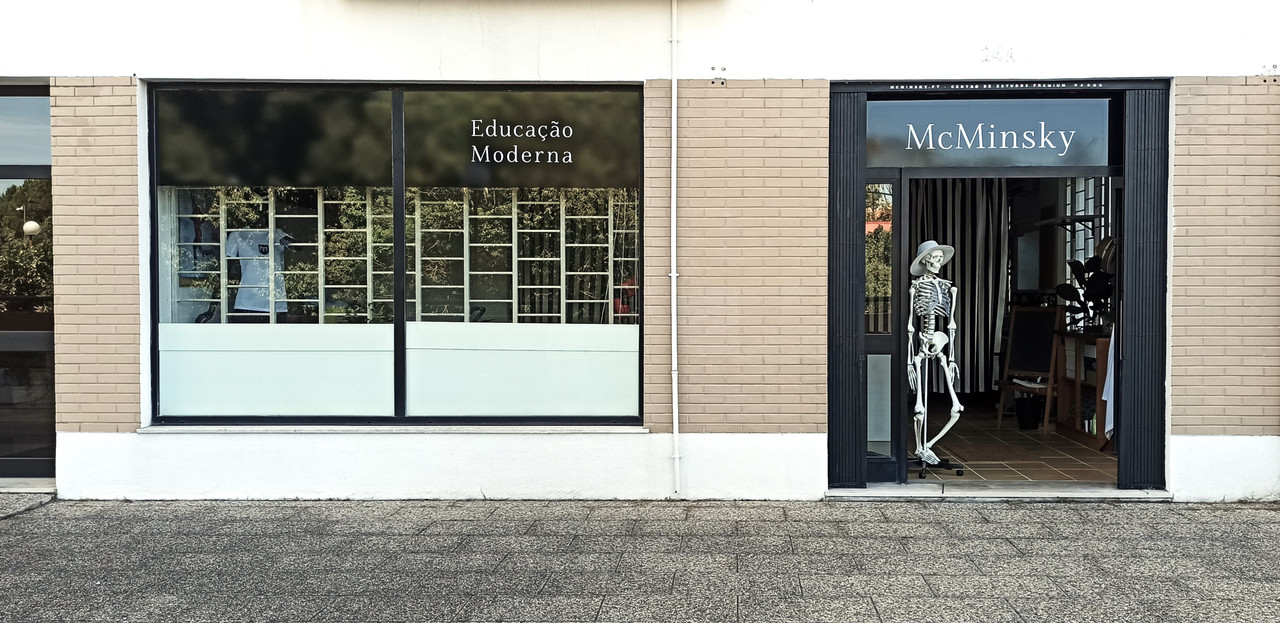
Azinhaga da Cidade 24A r/c, 1750-063 Lisbon. Located in a private condominium with security. We host meetings and small training sessions here.
We bring the team to the municipal auditorium, the school or the library. This is where most institutional work happens.
Sessions, training and panels remotely, for teams spread across several services or several municipalities.
To request a 30-minute meeting, at Lumiar, at your institution or online.